How to Talk to Your Child About Big Feelings (Real Scripts, by Age)
“I never know what to say in the moment. I either talk too much, say the wrong thing…or my mind just goes blank.”
If you’ve ever stood there while your child is melting down and thought, “Now what?” you’re in good company.
You can sense that they need something from you. You want to get it right. And still…nothing.
Most parenting advice says "validate their feelings." Great. But what does that actually sound like at 7am before school? What do you say to a five-year-old who is sobbing on the floor? What about a thirteen-year-old who just slammed their door?
Here’s what it can actually sound like in real life.
One thing to keep in mind as you read: the goal here is never to talk your child out of what they feel. It's to help them feel understood first and then, over time, to build the language to understand themselves. Those two things happen in that order, and the scripts below are built around that.
Before You Say Anything: The Setup Matters
Here’s something that tends to surprise parents:
Your child is reading you before they’re listening to you.
Before they process a single word, they’re picking up on your tone, your face, your body, your energy.
So if the words are “I understand” but your voice is tight and your body is tense, what they actually hear is: something’s not safe here.
Which means this first step isn’t about finding the perfect sentence.
It’s about how you show up.
So before anything else:
Slow your breathing down first. Your nervous system is information to your child's nervous system. If you arrive activated, they read the room as unsafe before you've opened your mouth
Get to their level physically. Standing over a dysregulated child adds pressure. Sitting beside them or crouching down to their eye level tells their body the danger is over
Soften your voice, not your presence. Quiet and steady always beats loud and urgent
Let there be silence. A pause isn't a failure. Many kids need a moment of quiet before any words are available to them at all
The right tone will carry you a lot further than the perfect words said with impatience. Start there.

Ages 2 to 4: Simple, Short, Body-Based
Your toddler isn't being dramatic when they cry over a broken cracker. Their emotional brain is fully online, but the language and reasoning parts are only just getting started. Big feelings arrive way before the words to describe them do.
Keep everything short, physical, and present-tense.
Try saying:
"You're really upset right now. That felt so frustrating."
"Your body is telling you something feels wrong. I'm right here."
"You wanted that so much. It's hard when we can't have what we want."
In practice:
Get down to their level before you say anything
Point to what you can see: "I can see your face is really red. That's your body feeling angry."
Two-word labels are enough at this age: "so mad," "really sad," "too much."
What tends to backfire:
"Why are you crying?" — They genuinely don't know yet, and the question adds pressure they can't meet
"You're okay!" — Even said with the best intentions, it tells them their body is lying
Long explanations. One sentence with warmth behind it does more than a paragraph ever will
Ages 5 to 7: Name It, Then Connect It
Kids this age are starting to connect feelings to situations, but they need you to help make that link out loud. They're also beginning to notice that some feelings feel "bad" or embarrassing — so how you respond right now is quietly shaping whether they feel safe bringing their big feelings to you years from now.
Try saying:
"It looks like you're feeling disappointed. Does that sound right?"
"Your body just got flooded with feelings. That happens to everyone sometimes."
"I notice your hands are in fists. That usually means something feels really unfair."
Scripts for specific moments:
After the storm has passed:
"That was a big wave of feelings. What do you think started it?"
When "I don't know" is all you get:
"That's okay. Sometimes feelings are hard to find words for. You don't have to know right now."
When they're ashamed of how they reacted:
"Having big feelings doesn't make you bad. It just means you felt something really strongly."
What tends to backfire:
"Stop crying, it's not a big deal" — one of the most common things parents say, and one of the most consistently counterproductive. It doesn't stop the crying. It teaches them to hide it
Jumping straight to solutions before they feel heard — the lesson lands after connection, not before
Offering a reward to stop the feeling — it works in the moment and quietly teaches them that emotions are something to be switched off
Things worth trying:
Feelings charts or simple emotion cards work well at this age: "point to the face that looks most like you right now" <check resources>
Read books where characters have big feelings and talk about them afterwards, not during
Model your own feelings out loud and in real time: "I'm feeling a little frustrated. I'm going to take a breath." Kids absorb this more than any direct instruction
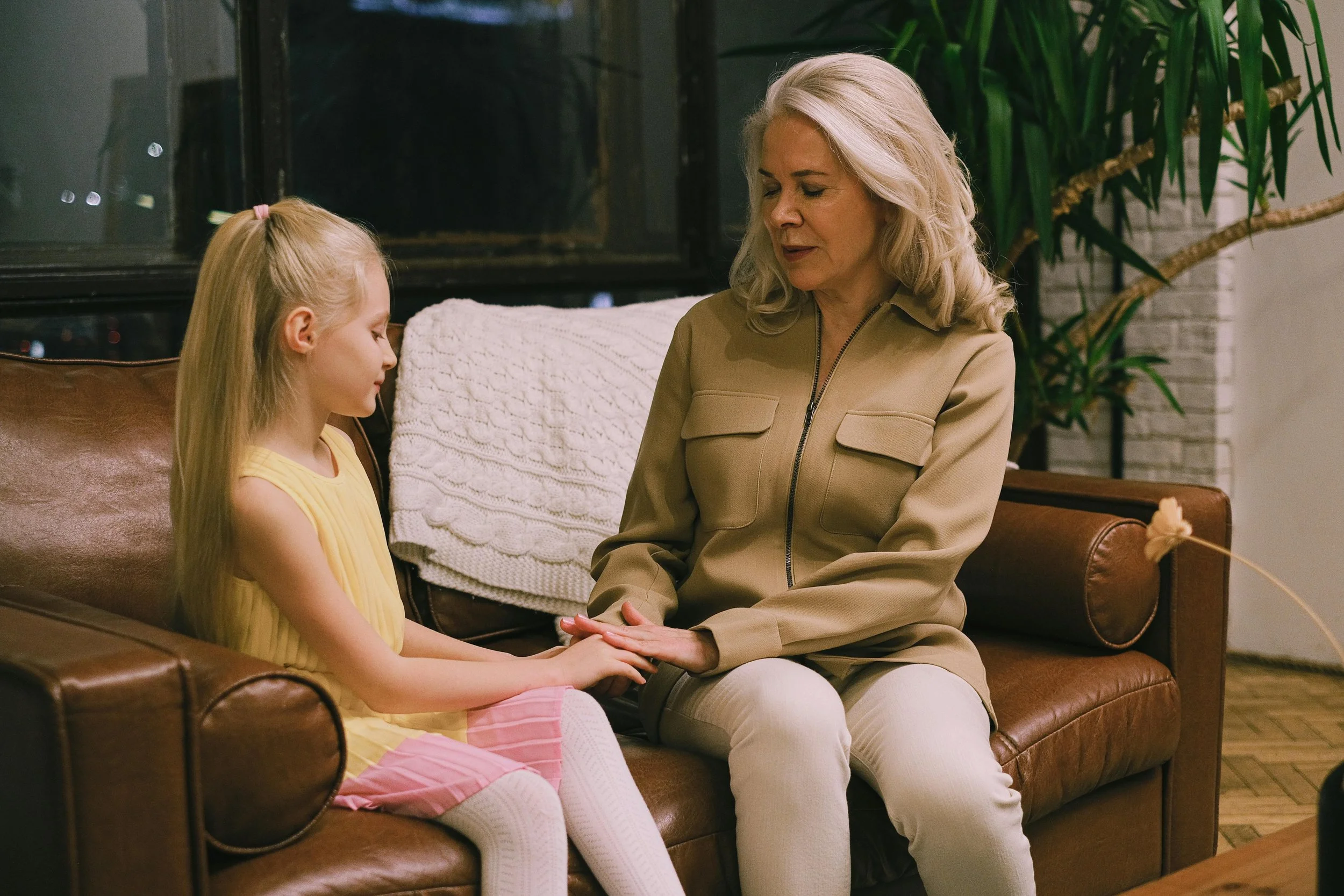
Ages 8 to 11: Go Deeper, Stay Curious
School-age kids have more words available and more capacity for self-reflection than younger children. But they're also becoming aware of how they look to their peers, and big feelings can start to feel embarrassing at this age. Your job is to keep the door open without pushing them through it.
Try saying:
"You don't have to talk about it right now. I just want you to know I noticed, and I'm here when you're ready."
"That reaction makes a lot of sense to me. Do you want to figure out together what set it off?"
"What did that feel like in your body right before everything got big?"
Scripts for specific moments:
When they shut down completely:
"I'm not going to push. I just want to sit here with you for a minute."
When it's "fine" but it clearly isn't:
"You don't have to pretend with me. I've seen you have a hard day. It's okay to say so."
When they're angry at themselves for losing it:
"The feeling wasn't the problem. We can work on what to do with it next time."
What tends to backfire:
Sitting face-to-face for a formal talk. Side by side (driving, cooking, a walk) means less eye contact and less pressure
Doing a full debrief right after a meltdown. Give it time before you revisit it
"You're so sensitive" — even said with love, it registers as shame
Things worth trying:
Ask specifics: "What was the hardest part of today?" lands so much better than "how was your day?"
Help them stretch their feelings vocabulary beyond mad, sad, and happy: worried, embarrassed, overwhelmed, left out, proud
Try a body map for kids who won't use words at all — draw an outline of a body together and ask where they feel things. It sidesteps the pressure of language entirely
Ages 12 and Up: Say Less, Stay Closer
Teens are wired for independence and peer connection. Too many words from a parent right after a big moment often makes them shut down faster, not slower. The goal here is to stay in the room without taking it over.
Try saying:
"I'm not going to make you talk. I just want you to know I see you."
"That looked really hard. I'm here if you want to think it through together."
"I'm not going to lecture. I just have one question — are you okay?"
Scripts for specific moments:
When they snap at you and then feel bad about it:
"I know that wasn't really about me. We're good."
When they're clearly overwhelmed but won't say why:
"You don't have to explain it. Is there anything that would help right now? Even just sitting here?"
When they wave off their own feelings:
"It's okay to think something matters. You don't have to talk yourself out of it."
What tends to backfire:
"We need to talk" — those four words shut most teenagers down before the conversation has even started
Sharing your similar story in the middle of their moment — even with good intentions it can feel like a redirect away from them
Pushing for resolution the same day. Sometimes the most connecting thing you can do is let it sit and check in gently the next morning
Things worth trying:
Normalize the physical side of emotions: "Big feelings hit the body first — tight chest, racing heart, that hot feeling. That's not weakness, that's your nervous system doing its job."
Text works for some teens in ways that live conversation doesn't. A short message after they've gone quiet can open a door that a face-to-face couldn't
Keep showing up even when they push back. Consistency over time means more than any single perfect conversation
When Nothing Works
Some days, not even these scripts land. Your child is too flooded to take anything in, and everything you try either bounces off or makes it worse. It means their nervous system has hit its limit.
On those days:
Stop trying to connect through words and just stay physically present
Offer something sensory instead of conversational: a glass of water, a blanket, a few minutes outside
Give them an exit that doesn't feel like rejection: "I'm going to be in the kitchen. Come find me when you're ready."
Try writing if speaking isn't landing. A short note or a text sent after they've gone quiet can open things up in a way that nothing else did
The goal on the hardest days isn't resolution. It's just staying in connection. That alone is worth more than you think.
One Last Thing
These scripts will feel awkward at first. That's expected. You're learning a new language in real time, usually while tired, usually while your own nervous system is running hot.
What matters isn't that you say it perfectly. What matters is that you keep coming back. Every time you try, even when it doesn't land, you're showing your child that their feelings are worth showing up for. Research consistently shows that this kind of emotional responsiveness over time, not any single perfect conversation, is what builds a child's capacity to understand and manage their own feelings.
Programs to Support Your Family
SPACE Parenting Course:
Learn strategies to reduce childhood anxiety and support emotional regulationDBT-C Parent Group:
Skills for supporting emotional independence while reducing family stressSSP - Safe and Sound Protocol:
Research-based listening therapy to help regulate the nervous system
About the Author
Suri Nowosiolski, LCSW, MSpEd, is a licensed clinical social worker with over 30 years of experience supporting children, teens, and the parents who love them. She is the founder of Hearts & Minds Psychotherapy Group in Valley Village, CA.
Related Posts
📌 What's Actually Happening in Your Child's Brain When Big Feelings Take Over- Demystifying the neuroscience behind emotional meltdowns to help parents co-regulate and restore calm.
📌 Why Your Child Reacts Before They Can Think (And What to Do in That Split Second) - Understanding the high-speed threat response that bypasses logic, with real-time intervention strategies for parents.
📌 Is Your Child a Supersensor? - Understanding the Highly Tuned Nervous System - Identifying the unique signs of deep empathy and sensory sensitivity in children who process the world intensely.
📌Anxiety IQ: A Kid's Guide to Understanding and Managing Anxiety - Explaining the biology of an overprotective internal alarm system with simple, kid-friendly analogies.