
FREE GUIDE
Is Your Child a Supersensor?
A Parent's Guide to Understanding Deeply Feeling Kids
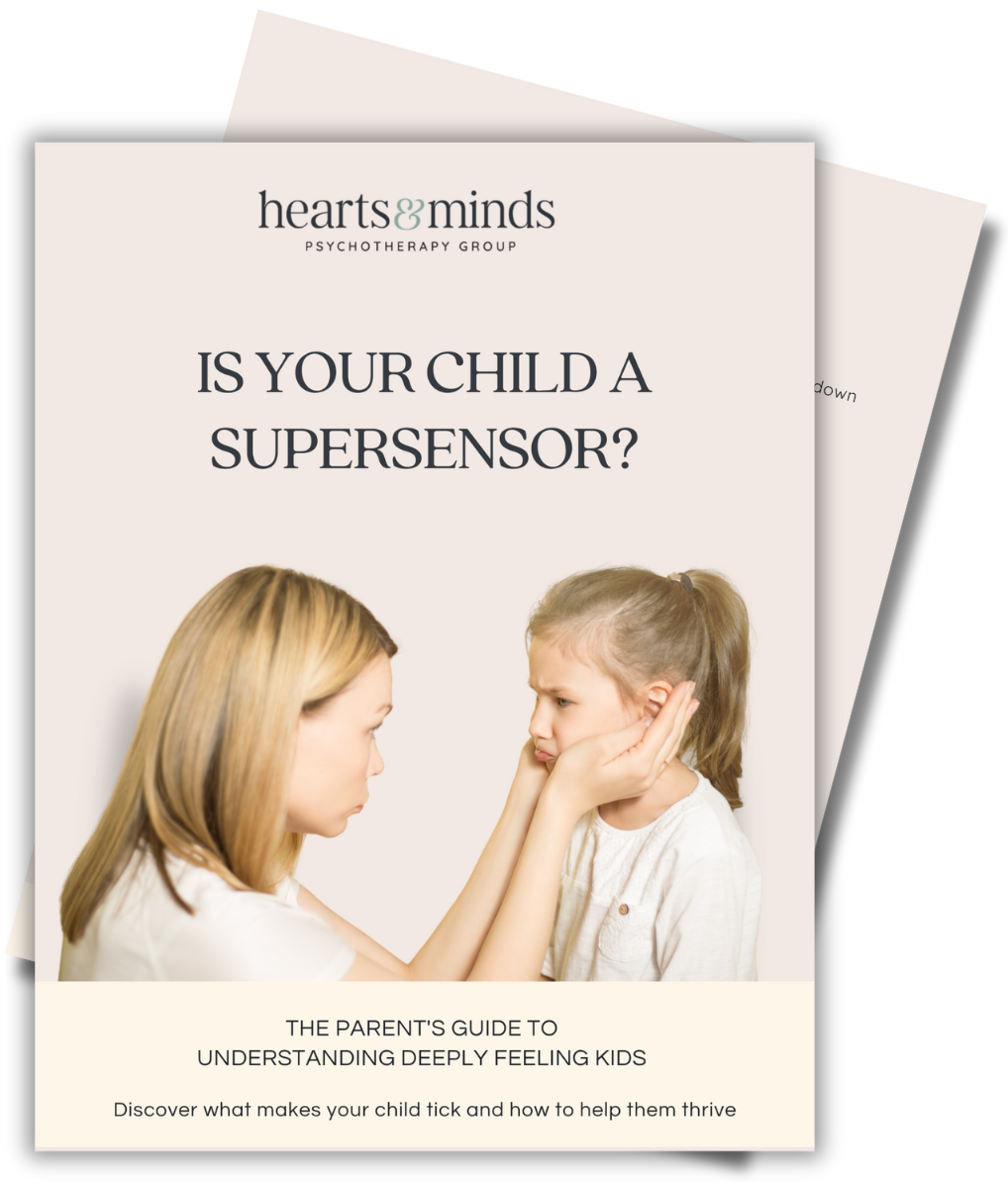
Does your child have complete meltdowns over the "wrong" color cup, complain that a sock feels weird, or spiral after a friend gives them a funny look? Do you find yourself bracing for battles during routines that seem easy for other families?
You're not imagining it—and you're not alone. Some kids are wired to feel everything more deeply. Our guide, designed by specialists in emotional intensity, helps you understand your child’s behavior and gives you real tools to support them.
Do simple moments turn into major struggles?
What Makes This Guide Different?
Our FREE guide shares the exact framework therapists who work with emotionally intense kids—without labels, without shame. You’ll learn how to:
Our guide gives you science-backed strategies that:
-
Learn the specific signs that distinguish a "supersensor" temperament from typical childhood emotions. Discover why your child experiences a mildly annoying situation at intensity level 30 while other kids feel it at a 3, and understand how this wiring affects everything from homework to friendships.
-
End the exhausting pattern where emotional intensity leads to correction, correction triggers feelings of being misunderstood, and misunderstanding fuels bigger meltdowns. This proven approach breaks down exactly why traditional consequences and reassurance often backfire with emotionally intense children.
-
Work through two evidence-based activities you can implement immediately—the Emotion Wheel and Body Scan for Kids. These mindfulness-based practices teach children to identify their feelings accurately and recognize physical warning signs before reaching full dysregulation.
-
Get clear, no-guesswork signs that tell you when emotional intensity has moved beyond what’s manageable, and when it’s time to bring in professional help.

Inside Your Free Toolkit:
-
Discover whether your child is a supersensor with our comprehensive checklist covering emotional intensity, sensory sensitivity, and daily life challenges. Learn why their emotional dial goes from 1 to 100 while most kids go from 1 to 10, and understand that this isn't manipulation—it's genuinely how they experience the world.
-
Explore how emotional outbursts lead to correction, which leads to feeling misunderstood—and why this cycle keeps repeating. Real-life examples help you recognize and disrupt it.
-
Explore both sides of emotional intensity—the exhaustion of managing everything from transitions to bedtime, and the profound strengths that emerge when supersensors learn regulation skills. Explore how that overwhelming sensitivity can evolve into deep empathy, creativity, and perceptiveness.
-
Get step-by-step implementation guides for the Emotion Wheel (expanding emotional vocabulary) and Body Scan for Kids (connecting physical sensations to emotions). These foundational DBT-C skills include tracking sheets and specific language to use during both calm and dysregulated moments.
-
Get structured practice suggestions for each tool plus journaling space to track what works, what's challenging, and what you're noticing as you build these skills with your child.
-
Learn about comprehensive approaches that address the complete picture—emotion regulation strategies, distress tolerance skills, parent regulation techniques, and creating a validating home environment. Understand when these tools indicate readiness for more intensive support.
