Why Your Child Reacts Before They Can Think (And What to Do in That Split Second)
"My child just explodes out of nowhere. There's no warning, no pause, no thinking. Just zero to one hundred in seconds."
You ask your child to turn off the TV. They erupt.
You tell them dinner isn't pizza tonight. Full meltdown.
From the outside, it looks impulsive, irrational, even manipulative. But from inside your child's brain, something has just happened and it happened faster than conscious thought.
Understanding what happens in that split second changes everything about how you choose to respond.
The Brain Has a Shortcut And It Bypasses Logic Entirely
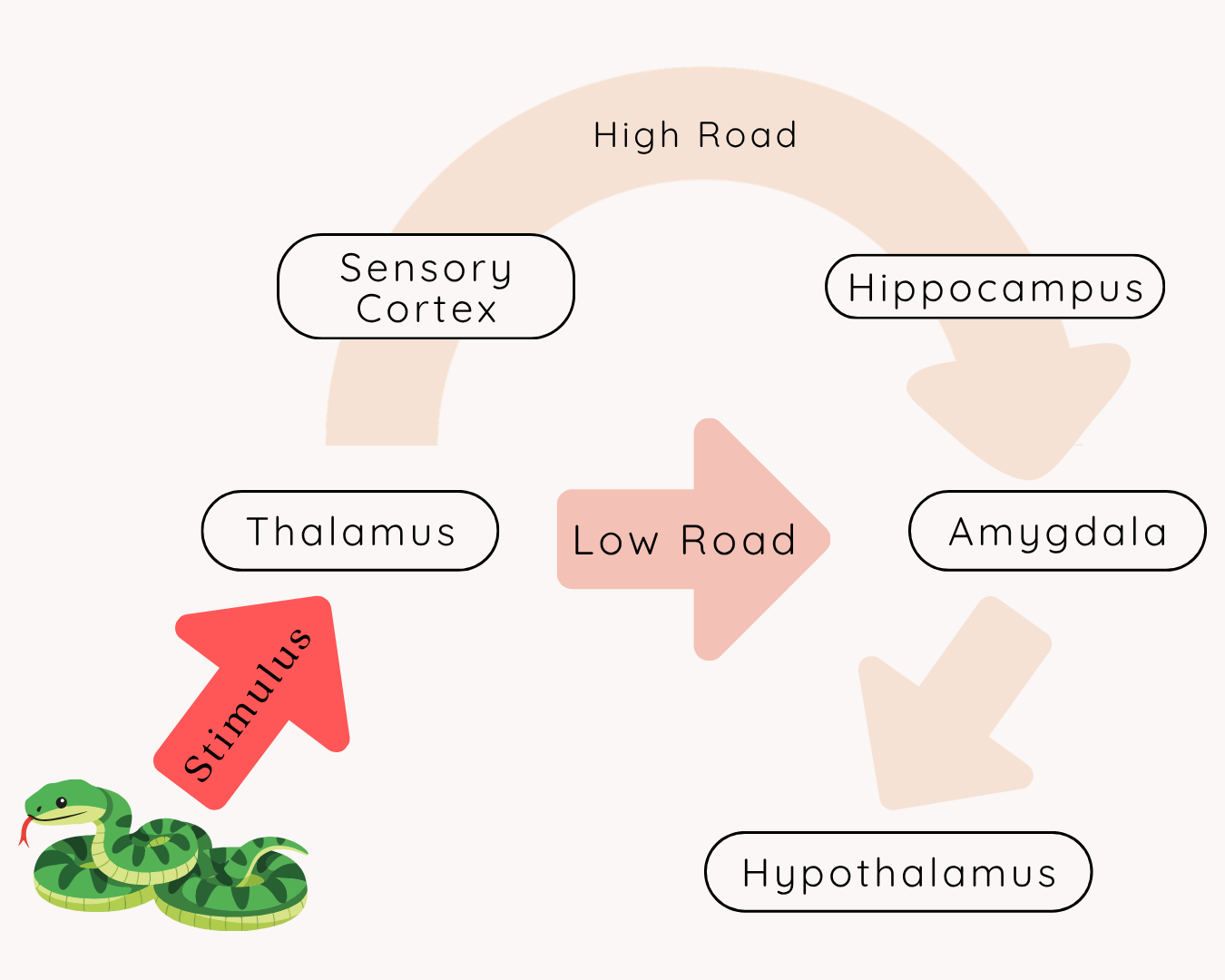
When your child's brain detects something it reads as a threat, it takes what we call the "low road." For a big feeler, that threat can be something as small as a disappointment, correction, feedback, a surprise, or an unexpected "no."
The signal skips the thinking brain almost entirely and goes straight to the amygdala, the brain's alarm center. The amygdala doesn't pause to evaluate whether the threat is real. It fires first and asks questions later. By the time your child's reasoning brain even gets the signal, the emotional reaction has already launched.
This happens in milliseconds. Your child doesn’t choose to skip the thinking part. The thinking part simply didn't get online fast enough.
What It Looks Like in Real Life
This "low road" reaction is why your child can go from completely fine to completely overwhelmed faster than you can blink. It's also why logic is so useless at that moment.
When the alarm fires, the brain shifts into one of four survival states. You've probably seen all of them:
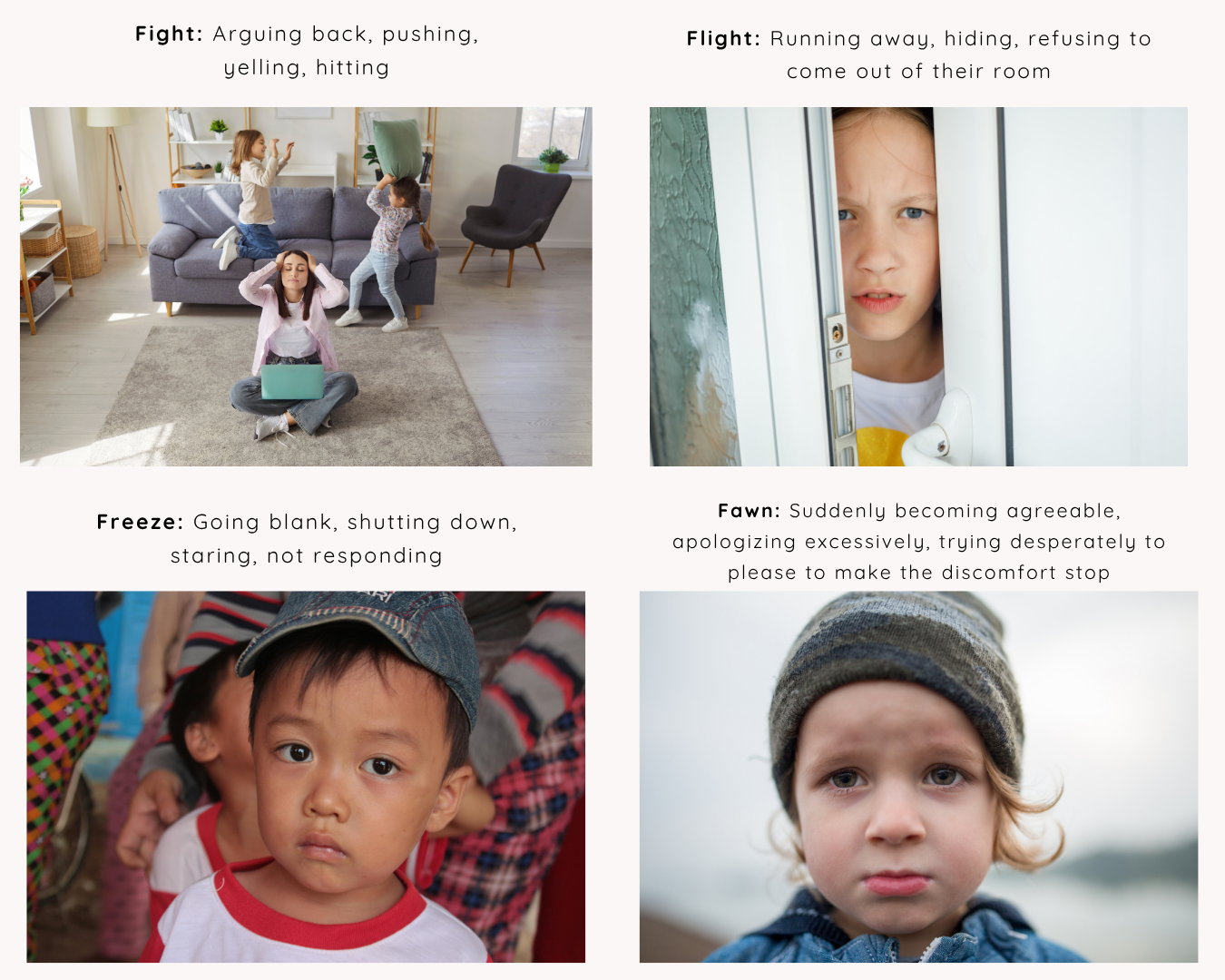
None of these are choices. They are the body doing exactly what it was built to do under threat. The problem is that your child's nervous system is sometimes reading "no pizza for dinner" as threat-level danger.
Why Big Feelers Hit This Point Faster
For children with sensitive nervous systems, the threshold for triggering that alarm is lower. Small disappointments, sensory discomfort, unexpected changes, a perceived slight from a sibling. Any of these can be enough to bypass the thinking brain and send them straight into survival mode.
This isn't bad behavior. The brain's default network, the part responsible for thinking through consequences and considering other people's perspectives, isn't developed enough until around age 13 in most children, and even later in some. For your sensitive child, this gap is wider and more pronounced.
Knowing this doesn't mean lowering your expectations. It means calibrating them to what your child's brain is actually capable of in high-emotion moments.
What Helps in That Split Second
You can't stop the low road from firing. But you can shorten the time your child spends there.
In the moment:
Don't match their escalation with yours. When you raise your voice or tense your body, their alarm reads you as an additional threat
Get physically low and close. Eye level sends a message of safety their nervous system understands before their thinking brain is even back online
One short phrase is enough: "I've got you" or "I'm right here." You're not solving anything yet. You're telling their alarm system the danger is over
After they've calmed down:
Wait longer than you think you need to before talking about what happened. The thinking brain takes time to come fully back online after a hijack
Keep it brief when you do reconnect. "That was a big one. You okay?" is a better opener than a detailed debrief
This is when you can start to help them name what triggered it, not to assign blame, but to build their awareness over time
In the long run:
DTeach your child about their own alarm system during calm moments. Kids who understand what's happening in their brain are genuinely better equipped to recognize it early
Practice the tools (breathing, movement, a calm phrase) before they're needed, so the brain has something familiar to reach for when the alarm fires
When to Reach Out for Support
Most children react fast and big sometimes. That's developmentally normal. But it may be time to talk to a professional if you're noticing:
Reactions that seem completely and consistently disconnected from the size of the trigger
Your child cannot come back to calm even with your help
The intensity is increasing over time rather than gradually leveling
Daily life at home, school, or with friends is being regularly disrupted
Getting support early doesn’t mean something is seriously wrong. It just means you’re noticing what’s going on—and taking care of it before it gets bigger.
A Note to Sit With
Your child's reaction isn't about you, even when it's directed at you. And it isn't about a character flaw in them. It's a nervous system doing what it was designed to do, in a brain that hasn't finished growing yet.
The more you understand that split second, the less you'll take it personally, and the more available you'll be to help them through it.
Programs to Support Your Family
SPACE Parenting Course:
Learn strategies to reduce childhood anxiety and support emotional regulationDBT-C Parent Group:
Skills for supporting emotional independence while reducing family stressSSP - Safe and Sound Protocol:
Research-based listening therapy to help regulate the nervous system
About the Author
Suri Nowosiolski, LCSW, MSpEd, is a licensed clinical social worker with over 30 years of experience supporting children, teens, and the parents who love them. She is the founder of Hearts & Minds Psychotherapy Group in Valley Village, CA.
Related Posts
📌 Understanding Big Feeling Kids: When Your Child's Emotions Feel Too Big for Their Body - Understanding biology-based emotional intensity and practical strategies for regulation.
📌 When Goodbye Feels Impossible: Navigating the Waves of Separation Anxiety With Your Child - Navigating childhood separation anxiety through developmental stages and support.
📌 When Small Moments Feel Like Big Rejections: Understanding Rejection Sensitive Dysphoria in Children - Supporting children through extreme emotional pain from perceived rejection.
📌What's Actually Happening in Your Child's Brain When Big Feelings Take Over - Understanding the biology of meltdowns to help your child regain calm and control.