The Power of Family Meals: Building Connections Around the Dinner Table

Everyone's eating at different times again. Takeout containers are scattered across the counter, homework is half-done on the table, and you're grabbing whatever’s quickest while standing at the kitchen counter. Between work deadlines, after-school activities, and the never-ending to-do list, sitting down together can feel impossible.
Still, that messy, imperfect moment around the table could be one of your best parenting tools.
Why Family Meals Actually Matter for Development
Children who eat regular family meals develop stronger communication skills, do better in school, and regulate their emotions more effectively. Kids who share three or more family meals per week show lower rates of anxiety and depression as they grow.
When families eat together regularly, children practice expressing themselves and listening to others. They see how conversations work. And they get to practice these things in a safe, familiar space surrounded by people who love them.
The Science Behind Connection
Family meals create built-in chances for connection. They give parents a chance to spot when something’s off, share in small wins, and talk through tough days. These little check-ins build stronger relationships over time.
Meals also help kids build social skills, taking turns in conversation, disagreeing respectfully, and being curious about other people’s experiences. These moments translate to how they connect with friends and teachers, too.
Research from Columbia University found that teens who eat with their families five or more times a week are more likely to earn A’s and less likely to engage in risky behaviors. Something as simple as sitting down to eat becomes a long-term protective factor.

Common Family Mealtime Challenges
Let’s be real: family meals are hard. Everyone’s on different schedules. Work runs late. Practices stretch into dinner time. Finding time to schedule a family dinner can seem impossible.
Then there’s the pressure to do it “right.” Social media has us comparing our leftover pasta to someone else’s perfectly marinated and grilled steak or pot roast. Add kids complaining about food, sibling bickering, or a full-blown meltdown, and it feels less like connection and more like the United Nations.
By dinner, everyone’s already drained. Sitting down and talking can feel like one more demand.
What Real Family Meals Look Like
Authentic family meals are messy, interrupted, and sometimes feature cereal for dinner. And that's completely acceptable.
What actually counts as a family meal:
Weekend breakfast when everyone's awake at the same time
After-school snacks at the kitchen table
Takeout pizza eaten straight from the box
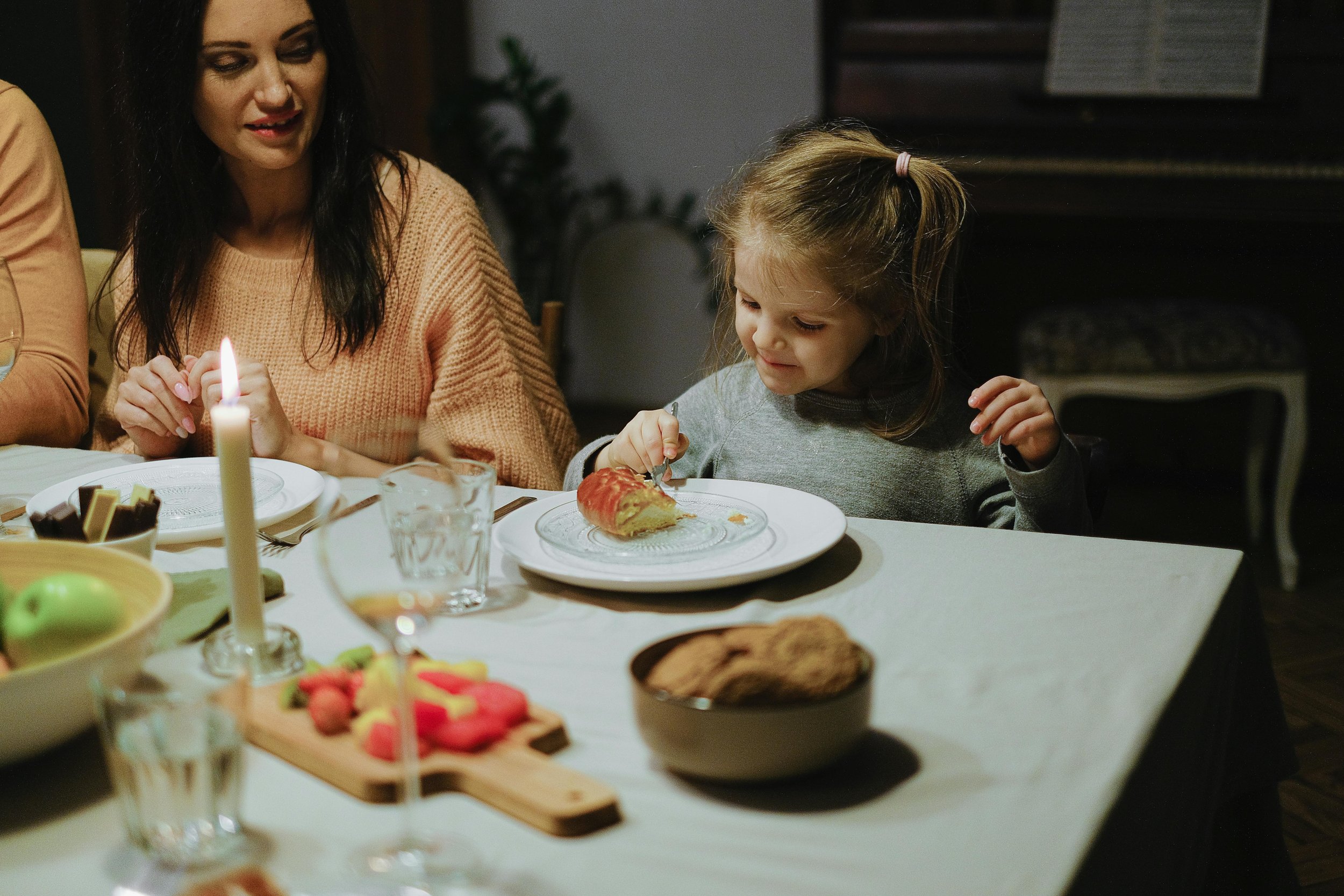
Creating Sustainable Family Meal Routines
Start Intentionally Small
Don't attempt to transform everything overnight. Pick one meal a week that works for your family's schedule. Maybe Sunday morning pancakes or Wednesday pizza night. Once that feels natural, consider adding more.
Focus on Connection, Not Perfection
Begin meals by having everyone share something from their day. Ask questions that invite genuine conversation: "What made you laugh today?" or "What felt different about school?"
Remove all phones and devices. Yes, including yours. This one change often makes the biggest difference.
Address Common Obstacles Strategically
Picky eating: Include at least one item you know each child will eat, but avoid becoming a short-order cook.
Sibling conflicts: Set expectations before sitting down. If arguments start, gently pause: “We can talk about that later. Right now, let’s enjoy this time together.”
Demanding schedules: Get creative with timing. Maybe family connection happens over breakfast on weekends or afternoon snacks when everyone finally arrives home.
Finding Your Family's Unique Style
Every family's mealtime looks different. Some families thrive with elaborate Sunday dinners. Others connect better over quick breakfast check-ins. Some prefer the formal dining table, others gather around the kitchen island.
Consider theme nights to simplify meal planning. Taco Tuesday or Pizza Friday gives everyone something to anticipate while reducing daily decision fatigue.
Get kids involved. Young children can set napkins. Older ones can help prep the meal. Cooking together makes the whole thing feel like a team effort.
When Life Feels Overwhelming
Some seasons make family meals genuinely challenging. Single parents managing multiple jobs, families with children who have special needs, parents who travel frequently, sometimes traditional dinner simply doesn't work.
That's perfectly valid. The objective is connection, not checking boxes. Maybe your family time becomes bedtime snacks, weekend pancakes, or video calls when someone travels.
Why This Investment Matters Long-Term
Years from now, your kids won’t remember what you served. They’ll remember that you showed up. That you listened. That they had a seat at the table.
Some meals will be warm and memorable. Some will be chaotic. But they all help build something real.
Family meals aren’t about perfect parenting. They’re about being there, one bite, one messy moment, one small connection at a time.
When Family Meals Reveal Bigger Needs
Sometimes, sitting down together helps you see things more clearly, maybe your child struggles with social dynamics or emotional regulation.
If you’re noticing patterns that concern you, we offer evidence-based support:
PEERS® for Preschoolers
A parent education group that teaches young children real social skills for friendships and play.
DBT-C Parent Skills Group
For parents of kids with big emotions who need tools to manage them more effectively. [Schedule a consultation]
Resources for Deeper Family Connection
📘"Play Your Way to a Stronger Connection" - 10-minute daily activities to deepen parent-child relationships
Perfect for families wanting to build connections beyond mealtimes
About the Author
Suri Nowosiolski, LCSW, MSpEd, is a licensed clinical social worker with over 30 years of experience supporting families. She specializes in helping parents create stronger connections with their children through evidence-based approaches. Suri is the founder of Hearts & Minds Psychotherapy Group.
Looking for more support?
SPACE: Discover your power as a parent to free your child from anxiety. Learn SPACE, a parent-based treatment clinically proven to effectively reduce child anxiety – through nothing but smarter, more informed parenting.
PEERS® for Preschoolers: Help young children develop social independence and confidence through our evidence-based parent education group:
Tween Social Anxiety Group: Help your 9–12-year-old build confidence and feel more at ease in social settings.
Teen Social Anxiety Group: Build confidence and independence in social situations for middle and high school students:
DBT-C Parent Group: Learn skills to support children's emotional independence and regulation while reducing family stress: